Dance Before The Lord

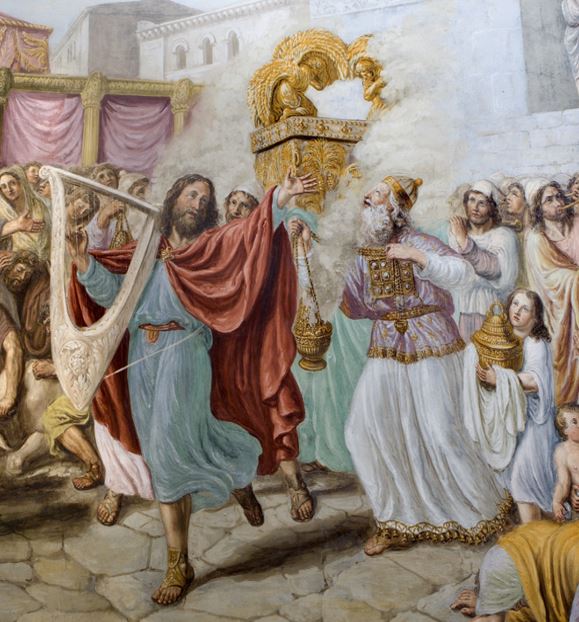
In today’s reading from the Second Book of Samuel, we hear of how King David danced before the Ark of the Covenant. The Ark, a golden chest with cherubim on its cover, contained within it the manna from heaven that was given to the Israelites in the desert when they were complaining and asking for food during the Exodus, the two stone tablets upon which were written the Ten Commandments, and the Rod of Aaron. It is a precursor to the new Ark of the Covenant, Mary, the Holy Mother of God, who contained within her womb the Bread of Life, the Word of God made flesh, and the High Priest Himself.

The Ark of the Covenant could not be touched by human hands. When it was transported, it had to be lifted using rods that went through either side. If one was to touch the Ark, they would be struck down and die instantly.

In the reading today, we only hear from the point that King David went up to Obed-edom’s house to bring the Ark to the City of David. When those carrying the Ark had walked ‘six paces’ David takes on a priestly role, offering sacrifices, wearing a linen ephod (loincloth), and blessing the people. He dances before the Lord ‘with all his might.’ As David enters the city with the Ark, Michal, the daughter of Saul, looks out and sees David leaping and dancing before the Lord. David is clearly in a state of great joy and elation.

However, if we go back a little and take a look at what happened before David brought the ark from Obed-edom’s house to the City, we see how not everything was so rosy throughout the entire journey of transportation of the Ark. When David went to the house of Abinadab with all the chosen men of Israel, he brought the Ark out of the house with Uzzah and Ahio, the sons of Abinadab, driving the cart containing the Ark and all the men of Israel praising the Lord with songs and instruments. Everything was going well until the oxen leading the cart stumbled and Uzzah put his hand out to steady the Ark. As soon as he did this, he was struck down and died.

We read:

And David was angry because the Lord had broken forth upon Uzzah; and that place is called Perez-uzzah, to this day. And David was afraid of the Lord that day; and he said, “How can the ark of the Lord come to me?” So David was not willing to take the ark of the Lord into the city of David; but David took it aside to the house of Obed-edom the Gittite. And the ark of the Lord remained in the house of Obed-edom the Gittite three months; and the Lord blessed Obed-edom and all his household.

It was only after King David heard of how the Lord had blessed the household of Obed-edom that he went and took the Ark to the City of David.

One might wonder how David could have danced before the Lord given what happened to Uzzah.

While David demonstrated some anger and fear because of what had happened to Uzzah, he came to realise the glory of the Lord, and wanted to honour the Lord and bring Him into his City. David may have struggled to understand why Uzzah was struck down, and this no doubt contributed to his leaving the Ark in the house of Obed-edom. But the Lord once again helped him to see His great glory, and David and the people of Israel rejoiced in the Lord.

Like David, we all face difficult moments in our lives. At these times we can become upset, angry, fearful, anxious. We can experience times of desolation, times when we struggle to understand where the Lord is leading us or wonder if He can hear what we are saying to Him. It is at these times that we must stay close to the Lord and continue to bring our concerns to Him.

Even at such moments, we can demonstrate great faith and trust in the Lord and lean on Him, asking Him to take over and guide us. He may be using these moments as occasions on which to test us, to test our faith, and to bring us closer to Him.

We must remember, even in trying times, even when we don’t know what God is doing in our lives, when we are trying to discern where He is leading us, what He has planned for us, that God is good. And we should dance before the Lord with all our might, with all our joy. Like David, we should whirl around, leaping and dancing with great love for the Lord. God is so good, and He deserves all our praise. When we dance, it elicits great joy within us, even if we’re not great at it.

While the Ark of the Covenant is of old, and the Ark of the New Covenant, as well as the New Covenant Himself, both now sit enthroned in the Kingdom of Heaven, we can still dance before the Lord every day of our lives, and this is something that we should strive to do, even if we find ourselves in darkness. Because when we dance before the Lord like King David did in the days of old, the Lord will rejoice with us and illumine the darkness, even if it is just for a while.

So be like David and dance before the Lord. Rejoice in Him and be glad. For the Lord is good, and He will never abandon you. Even when you think He is not with you, He is right there beside you, watching over you. Dance for joy, honour and praise the Lord. For He will always lead us out of darkness into His great light.

May our hearts and souls dance before Him always. May our prayers be songs of praise to Him. And if it be the Lord’s Will, may our hearts and souls one day be entwined with another’s in an eternal dance of love before the Lord.

Surrendering To God

An act of surrender is probably one of the hardest things for a human being to do. There are a great deal of reasons for this, but a few come to the forefront. Our pride could be getting in the way, our desire to do everything ourselves as we want it to be done. We could be so caught up in trying to conform the wills of others to our own that we actually drive them away, disrespecting their own independence.

But I think the most profound reason for which we struggle to surrender is fear.

Surrendering the will is a beautiful thing, especially when we are surrendering it to God. God has given us the gift of free will. He is not a tyrant that is trying to rule over us and force us to do what He wants. He is not some puppeteer that is pulling the strings of our lives constantly, directing our lives like they are a piece of theatre. When God created us, He created us with the ability to choose. And how wonderful it is, how joyful He is, when we use our free will, the will that He has given to us, to choose Him.

While we have been given free will, which we can use however we like (albeit, not without consequences, which arise from all actions we choose, be they good or bad), we can make a conscious decision to give that will back to God. In giving our will back to Him we are not rejecting His gift – rather, we are perfecting it, we are showing Him how much we appreciate it, how much we love Him.

When we surrender our will to the Will of God, we are telling God that we have complete trust, faith, and confidence in Him. We are following the model of Our Blessed Mother Mary and St Joseph when they were asked to take on the greatest task of all – being the earthly parents of the Living God, the Word made flesh, the Saviour of the World, Our Lord Jesus Christ. Both were incredibly humble. Both demonstrated great faith, trust, and confidence in God. St Joseph in particular, who was going to leave Mary and move on with his life, surrendered his will to God’s Will when the Angel appeared to him in his dream. This great act of surrender brought St Joseph great rewards. His complete trust in God led to his being part of the life of Christ and being the spiritual father of us all. The Blessed Mother’s complete trust in God led her from a life as a humble handmaiden of the Lord to becoming Queen of Heaven and Earth, Mother of the Church, Mother of us all, and the most powerful intercessor we have in the Kingdom of Heaven.

But if surrendering our will to God’s Will is so wonderful, why do we struggle to do this?

Surrendering our will to God does not mean that we are giving up hope. And I think this is key in the discussion of why surrender can be so difficult.

We often struggle to surrender our entire will to the Will of God because our fears, our worries, our anxieties get in the way. Fear of the unknown is not uncommon. We often want to know what is going to happen next because it brings us some comfort. But this is not necessarily true comfort. True comfort is found in the Lord. And we can take great comfort in entrusting ourselves entirely to Him. Yes, it seems paradoxical, but I think we’ve come to learn by now that the ways in which God works tend to be as such.

I think that the prospect of surrendering our will to God’s Will scares us because we don’t know what God’s Will is. We worry that we are not going to get what we are hoping for, that the outcomes we wish for will not come into being. It can be incredibly daunting because we don’t have a guarantee of what might occur.

When we make an act of surrender to God, we are not just giving something that is holding us back and saying to Him, ‘here, take this, I don’t want it.’ We are giving Him everything, our entire will, all our worries, our anxieties, our concerns, our stress, our sorrows, our sadness, our joys, our heartaches, our hope, our love, our desires, our anguish, our feelings, our emotions, all of it. We lay it all down at His feet, and ask Him to take care of it all.

But God knows that we have hopes. And He assures us that when we surrender to Him these hopes are not destroyed.

One of the most beautiful prayers that Jesus has given to us is the Surrender Prayer. I discovered this prayer at the beginning of this year and I think we are truly blessed to have it.

The Surrender Prayer was given to a Neapolitan Priest, Father Dolindo Ruotolo. Fr Ruotolo had a great devotion to God and to the Blessed Mother Mary. He often called himself “the Madonna’s little old man” and the Holy Rosary was his constant prayer. The name ‘Dolindo’ means ‘pain,’ and this humble priest experienced much pain and suffering in his own life. He came from a family that had man financial struggles, and he suffered from several health conditions that made him weak. In the early years of his priesthood, accusations of heresy were brought against him, accusations which took years to clear. Yet no matter what trials this Servant of God faced, he surrendered himself to God, and Our Lord took care of him.

In private revelations, Jesus spoke to Father Ruotolo and gave him the words which he composed into the Surrender Prayer, a prayer we can pray as a Novena. In fact, Jesus said that “there is no other novena prayer more effective than this.”

Within the Surrender Prayer, Jesus tells us what we must do to surrender ourselves entirely to Him. He teaches us how we can stop worrying and thinking about all the problems we face and how to let go of trying to solve them all ourselves. He tells us how we should turn to Him, look at Him, and say to Him, “You take care of it.” He tells us how we need to close the eyes of our souls and rest in Him, surrendering completely to Him and trusting completely in Him. He says:

“If you say to Me truly, “Thy will be done,” which is the same as saying, “You take care of it,” I will intercede with all My power and I will resolve the most difficult situations.”

While the entire Surrender Prayer is so incredibly beautiful, I think one of the most striking parts is when Jesus says:

Close your eyes and let yourself be carried away on the flowing current of My grace. Close your eyes and do not think of the present, turning your thoughts away from the future, just as you would from any temptation. Rest in Me, believing in My goodness and I promise you by My love that if you say, “You take care of it,” I will take care of it all. I will console you, rescue you and guide you.

We can get so caught up in our worries, so battered and weighed down by our anxieties, that they can begin to take over our lives, even going so far as to overwhelm and incapacitate us. But Jesus wants us to surrender that to Him. Yes, He wants us to surrender our entire selves to Him, including our entire will to His own, but He promises us that He will take care of us. And Jesus has fulfilled every promise He has ever made. He fulfilled all the promises made to those in the Old Testament, and He continues to keep His promises to us to this very day.

The response to the Surrender Prayer sums up the disposition that Jesus wants us to have:

O Jesus, I surrender myself to You, take care of everything!

In surrendering to Him, we are giving ourselves entirely to Him. We are placing all our faith, trust, and confidence in Him, surrendering our will to His Will, His Divine Will. We may not know what that Will is, we may not know what to expect, what God has planned for us, but we trust that He will take care of us in every way, that He will guide us, that He will be there for us and never abandon us.

As mentioned earlier, this does not mean giving up the hopes that we have. Jesus tells us Himself:

Surrendering to Me does not mean to stress or to be upset, or lose hope.

We can still have hope that, in surrendering to God, in abandoning ourselves to Him, He will answer our prayers. If anything, I think we can take great comfort in knowing that Jesus Himself reassures us of this:

Why do you confuse yourselves by worrying? Leave the care of all your affairs to Me and everything will be so peaceful. I say to you in truth that every act of true, blind and complete surrender to Me will produce the effect that you desire and will resolve all your difficult situations.

Surrender yourself to the Lord, and He will work great wonders in your life. Give Him all you have, and He will give you His all in return.

God is so, so good.

(If you would like to pray the Surrender Prayer, here is a link to the prayer on Hallow: https://hallow.com/blog/how-to-pray-the-surrender-novena/. If you would like a physical copy of the prayer on a prayer card, you may be able to find some at your local Catholic church, or you can contact Mary’s Rosary Chain – http://www.marysrosarychain.org)

The Great Gift Of Family

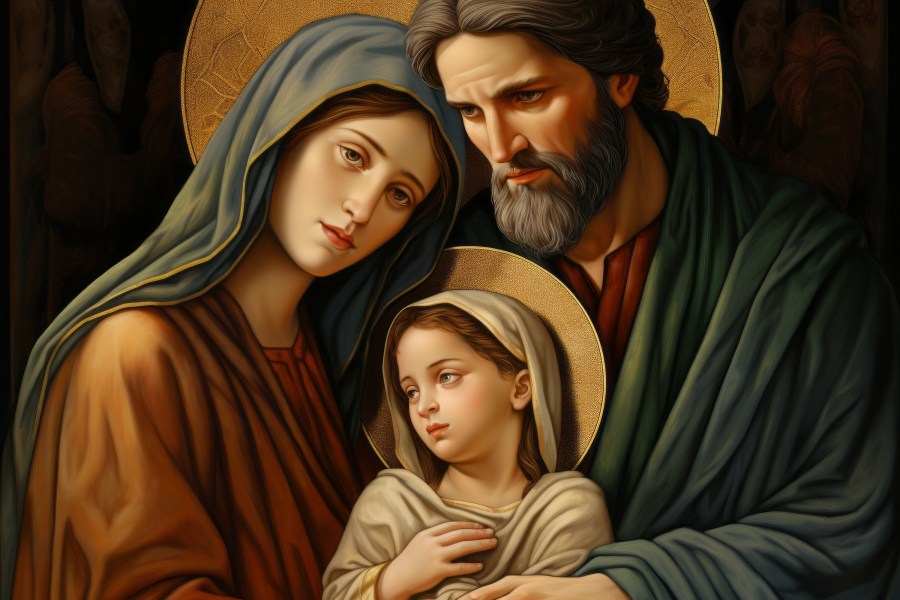
This weekend, we celebrate the Feast of the Holy Family. By far, they are the greatest family in existence. If it were not for this beautiful family, mother, father and child, our world would be a much darker place than it is.

The Holy Family is one we must all do our best to emulate in our own lives. They are the perfection of what family is. Through them, Jesus Christ sanctified the family itself, making it beautiful and holy.

Family is so important. It is essential to our humanity, to who we are. Each one of us is only here, living and breathing, because two others committed to each other and decided to start a family. We are only here because of the love of two people who became one, our mother and father, and their mother and father before them, and so forth.

This is the beauty of marriage. It is not just a procedure we go through, a ceremony with a bunch of documents to sign for the sake of making things official in the eyes of the world. It is so much more than that. It is an incredibly special bond, a commitment of love between two people who have found in each other someone they are willing to give their entire selves to. The Sacrament of Holy Matrimony is that with Christ at the centre. The love that the two have for each other is expounded by their love for Christ and Christ’s love for them.

These individuals, once joined together in Holy Matrimony, are no longer individuals. They are one with each other. They commit to bringing new life into the world, and so bring forth children who they raise with love, care, and tenderness.

When Mary and Joseph were joined together, when they were betrothed to wed, everything was fine until the Angel Gabriel came to the Blessed Virgin to announce to her that she would bear a Son, the Emmanuel, the Light of the World, the Christ-child, the Son of God. She was told she would conceive of the Holy Spirit. Mary, with great faith and confidence in God, gave her fiat, humbly accepting the role with which the Father was charging her in the salvation of man.

When Mary told Joseph about this, he was likely struck with confusion and uncertainty. He was no longer certain that he could be with Mary, and was ready to end their relationship. Being a good and thoughtful man, he was going to divorce her privately so as to spare her from shame. But, just as he was preparing to do this, the Angel appeared to him and told him to take Mary as his wife and look after the child as his own. Joseph, again being a man of faith and placing his trust in God, gave his own fiat and did as he was asked.

Mary and Joseph both dedicated their lives to God and to raising His Only Son, Our Lord Jesus Christ. They went through a great many trials, but both did so humbly and with great trust in God. I think it goes without saying that they would have experienced the challenges that any family would face. Take, for example, when Jesus was missing from their care for three days as a child. When they found Him in the temple, they were struck with relief, but you can imagine the anxiety, the fear that they must have endured at that time that their child was missing. I think this is something that many parents would be able to relate to. It would likely be the greatest fear of many parents that their child goes missing. Many would probably assume the worst right away. That anguish you would experience if your child, or even your brother or sister, went missing, is one that Mary and Joseph would have experienced over 2000 years ago.

But while there are always going to be trials and, no doubt, anguish and worry, family also brings with it the joyous moments that we can all hold onto with great fervour when we need them most.

Jesus’ earthly parents had such a great love for Him. Joseph raised Him as if He were his own son. He taught Jesus everything he knew about carpentry. Mary devoted herself to Him as if there were nothing else that made her happy. She knew that she would experience terrible anguish, that a sword would pierce her own Immaculate Heart when her Son was to enter into His Passion, but she agreed to take on that pain, that suffering, regardless, to unite it with His. Because she knew that this great sacrifice would be one that would bring about salvation for all of us, all Her children.

The Holy Family is the pinnacle, the perfection of what a family should be.

It is a husband and wife dedicated to each other, to growing in their faith, love, and holiness together, to worshipping together, praising together, glorifying together, honouring together, praying together, serving together, adoring together. Just as Mary and Joseph adored our Lord, so too should each loving couple, each engaged couple, each married couple, adore our Lord together. They should attend a Holy Hour together, or even visit an Adoration Chapel and just spend time in front of Our Lord in the Blessed Sacrament together.

It is a mother and father raising their children to know, love, and serve the Lord. It is this mother and father devoting their lives to their children, loving them like they love the Lord, doing all they can to take care of them and ensure their salvation.

It is children showing great love and devotion to their parents. Just as our parents dedicate their lives to us, so too should we dedicate our lives to them. We should take care of them, respect them, show obedience unto them. We should pray with them, grow in our faith and love of the Lord with them. We must remember that our parents made the greatest commitment of all when they committed to bringing new life, to bringing us, into the world. And just as they raise us with great love and devotion, so too should we do the same when we get married and have children of our own.

Family is what makes us who we are. We may have differences at times. We may fight, argue, irritate, or upset one another. But it is important for each of us to remember that no matter what may happen, no matter what may come between us, no matter what challenges we may face, no matter what hardships we may be made to endure, family matters most. Our family is so much great than all of these things. Differences can be reconciled. Challenges and hardships are better faced together than alone.

There is no point alienating family, because they are one of the greatest treasures we have. We have each been given a great gift in our families. God has blessed us immensely with love, His love, shown to us through our parents and families.

Family may bring challenges, but it also brings with it great joys, happiness, and, ultimately, love.

God is so good to us. He is so good to have given us all a family.

Even if we do not have a family, if we are alone, we can take comfort in knowing that we are part of His family, the Holy Family, the family of God.

So, on this Feast of the Holy Family, tell your family you love them. Thank your parents for all they do for you. Reconcile differences you may have with members of your family. Do all you can to emulate the Holy Family. And pray for those who do not have an earthly family. Pray for those who do not see their families.

And, above all, thank God for the family you have, for the great gift He has given you.

May God Bless us all, and may the Holy Family always watch over us, protect us, and keep us safe.

The Sanctity Of Life

Human life is so precious, so valuable. Each one of us has been made perfectly in the image of God. Each one of us has been given the gift of life. We should be so grateful to God for such a wondrous gift.

And yet, a culture of death is pervading the world as we know it. Disregard for the value of human life is rampant. Those who promote this culture of death worship at the shrine of abortion and euthanasia. They seek to put an end to life either before it has the chance to truly live, or prior to its natural conclusion. In their worldview life is not valuable. Or they may see some life as of greater value than other life.

Abortion is a terrible thing. It ends a beautiful human life before it can even take its first breath. There are so many different views in the community of those who support abortion as to when human life begins. Some say when the preborn baby develops a heartbeat, others when it is able to sustain itself outside the mother’s womb. Some even think termination right up to the end of a pregnancy is perfectly acceptable.

Scientifically, life begins at conception. This is not just a religious view; it is a scientific fact. When a man and a woman conceive a child, as soon as the sperm meets the egg, and embryo is formed with a unique set of DNA, a unique genetic make-up. It is a unique human life at its earliest stage. As that little life grows, it will develop a head, a body, all the organs, blood vessels, everything it needs to survive. As early as five and a half to six weeks after conception, that precious little life will develop a heartbeat. That little life should be taken care of and protected so that it can enter into this world and live.

Each one of us has been uniquely designed, knitted together in our mother’s womb. Each one of us is here because we were protected and given the chance to grow so that we could be born into this world. So what gives any one of us the right to deny that opportunity to any other preborn baby?

Life is no less valuable in the womb than it is outside of it.

What is truly saddening is that some people believe that if a preborn baby is likely to have some kind of disability, for example Down Syndrome, Cerebral Palsy, Autism, or any other condition, then it would be better for that life to be put to an end before it can come into the world to save it from suffering. This kind of thinking is truly horrific and utterly disrespectful to the sanctity of human life. Just because a baby might have a disability doesn’t render its life any less valuable. It doesn’t justify taking an innocent human life. It’s the sort of thinking that could be considered genocidal.

The other major argument made by those who demean and disregard the value of life is that it is a woman’s right to choose whether or not to have a child. No one has the right to take an innocent human life.

This is why there is such value in the sanctity of marriage. When a man and a woman commit to each other in the Sacrament of Holy Matrimony, they are giving themselves fully to one another, with a commitment to bringing new life into the world in the form of children.

The problem in modern society is that hookup culture is rife. As a result, far too many individuals are devaluing sex and turning it into something that it is not. It was not designed for meaningless hookups, but for the purpose of love and procreation.

On the other end of the spectrum of life is its end. Everyone should be able to live their life to its natural conclusion. But the culture of death seeks to speed up that end and terminate human life prematurely.

Now I think it is important to note here that suffering is not something we may necessarily desire. But there is a beauty in suffering (I know, it seems paradoxical) in that we can unite it to Christ’s suffering on the Cross. We can offer up our suffering for others.

Saint John Paul II once said to the sick and the suffering:

“You can do very much by your prayer and your sacrifice, your suffering… you can obtain much from Jesus Christ for those who may not need physical help, but who often are in terrible need of spiritual help… Your role in the parish is not merely passive.”

Saint John Paul II noted how our suffering can be redemptive, just like Christ’s suffering on the Cross, the greatest act of redemption known to man. I highly recommend reading his Apostolic Letter Salvifici Doloris, which focuses on the Christian meaning of human suffering.

There are many in our world who are suffering spiritually. They may be struggling in their relationship with Christ, or struggling with sin. They might be having a difficult time approaching the Sacrament of Reconciliation. They might be struggling with spiritual dryness. They may have been away from the Church for some time and may be trying to return. There are so many ways in which people can suffer spiritually. When others offer up their suffering for them, it can be transformative, not only for those who need such prayer and sacrifice, but also for those enduring suffering, because they can be at peace knowing that their suffering is working for the glory of the Kingdom.

So when euthanasia is promoted for those who are suffering, even those who may have a terminal illness, it is depriving those people of offering their suffering up for the good of others. It is also important to note that doctors can get diagnoses wrong, and such an error may deprive someone of life if euthanasia is used to prevent them from suffering. An individual that euthanasia is suggested to may live for a much longer time than they are prescribed by a doctor. That is valuable time that they could be spending with their family, making memories to last well after they are gone.

It is a terrible tragedy to cut life short.

December 28th marks the Feast of the Holy Innocents, a Feast day where we remember all those innocent lives who have been cut short before they could even truly live. We remember all the young boys, two years of age or less, who were slaughtered at the command of King Herod because of his obsession with power. We remember all the victims of abortion, all those who have died at the hands of euthanasia.

But we must also be wary that being pro-life, being part of a culture of life, does not end with praying for an end to abortion and euthanasia. We must also ensure that we take care of the poor and the needy, and that we treat our neighbours well. Our neighbours are each and every one of our fellow members of society. We should look after each other, pray for each other, and show the love and mercy of God to all.

When the Blessed Virgin Mary visited her cousin Elizabeth, who was pregnant with St John the Baptist, Elizabeth’s child leapt in her womb. One of the first people to rejoice at the life of Christ was a baby in the womb. It is so incredibly beautiful and clearly demonstrates the joy and the sanctity of human life.

Human life is sacred. All human life is valuable. No one life is more valuable than another. God has made us all in the image of His perfection. We must do all we can to protect life, to value it well. In order to preserve the sanctity of life, we must promote a culture of life.

Life is truly a gift from God.

May God Bless all human life, and may the Holy Innocents pray for us.

Why Are We Here?

I think most of us have pondered our existence at one point or another. It’s difficult not to wonder about our purpose, about the meaning of life. Many of the great thinkers, writers, philosophers, and theologians have all considered it and provided their theories and opinions.

So, why are we here?

That’s a great question. What are we all doing here, on this earth, at this time? Why do we have the family we have, the friends we have, the people who we love? What the heck is the point of it all?

Some would propose that our existence is solely and earthly one. We have no real meaning, per se. We just are. We are born, we go through life, and then we die. That’s it. There is nothing more.

Others might say that our purpose in life is to make the most of it, to spend it with people who enrich it, who make it better, people who we love. Again, however, they will say that once we reach its end, there is no more. We cease to exist and there is nothing but an abyss of darkness.

Is it any wonder people are scared of death when this is what they are told?

In an increasingly secular world, people don’t really want anything to do with religion. Some call it a cult, others label those who are religious insane or say that they believe in fairytales. As a Catholic myself, I have come to understand that not everyone wants to be religious. Oftentimes, it’s the world that has turned them against religion, against faith. And while I’m not here to force anyone to become a Catholic, to follow God, I am going to do what I can to at least provide a little catechesis in the hope that it might help you to understand that we are not just some insignificant beings who live only to die into nothingness.

Our purpose can be found in the intentions of our Creator. Each one of us did not just spawn out of nothingness. We did not just suddenly materialise into existence. We were each created by someone far greater than us. We were each created by God in His image. God has known us since our conception.

In the Book of Jeremiah we read:

“Before I formed you in the womb I knew you, before you were born I set you apart; I appointed you as a prophet to the nations.” (Jeremiah 1:5)

And Psalm 139 praises God for creating us:

‘For you created my inmost being; you knit me together in my mother’s womb. I praise you because I am fearfully and wonderfully made; your works are wonderful, I know that full well. My frame was not hidden from you when I was made in the secret place, when I was woven together in the depths of the earth. Your eyes saw my unformed body; all the days ordained for me were written in your book before one of them came to be. How precious to me are your thoughts, God! How vast is the sum of them! Were I to count them, they would outnumber the grains of sand – when I awake, I am still with you.’ (Psalm 139:13-18)

It’s such a beautiful Psalm. God has known us longer than we have known ourselves. God’s intentions for each of us were to create a human being, a beautiful individual, who could give glory to Him through the life they lived.

Each one of us has been created to honour Him in any and every way we can. And we have each been given certain gifts that we are to use to give glory and praise to Him and build His Kingdom on this earth. We were made for community, each of us have been given these gifts to enhance that community, to make it so rich and beautiful.

Some of us praise and glorify Him through music, some through writing, some through youth ministry. We might honour and glorify Him in our work, by being a model of Christ to those around us and those whom we meet on our journey through life. Some of us might serve in different ministries in our Parish communities, some may volunteer to help those in need.

Each of us can honour, praise, and glorify God in so many different ways.

In doing so, we often find our disposition tends towards one of fulfillment and happiness. The reason for this is simple – we are living out our purpose in life.

But our purpose, the meaning of our life, goes much further than just giving glory to God on this earth. Our meaning, our existence, is one that does not end in death, but transcends this earthly life.

When we breathe our last breath, our earthly bodies will give out, They will cease to function, they will be prepared for burial or cremation, and, ultimately, they will end up either in the ground or reduced to ashes.

But our physical bodies do not just stop working because our life has ended and faded to black. Our bodies are not just physical in nature, but also consist of a spiritual element – the soul. The soul is what makes us who we are. It is our inmost being. Our life, our love, all of it originates in the soul.

You might have heard someone who witnessed someone else’s death that ‘the light went out of their eyes.’ Someone told me just recently that when they witnessed a person’s death, they noticed a brief change in colour in the person.

These descriptions are very likely observances of the soul leaving the body. While the body is left lifeless, the soul lives on, beginning its journey to its final home for eternity. Depending on the life the individual lived, that soul will either end up in eternal paradise, returning to dwell with its Creator, in a state of purgation where it must be purified before entering into the home of its Creator, or condemned to eternal life in the fires of despair.

The meaning of our existence, therefore, is not just to live and die. It is to live and live.

We must glorify God in every way possible on in our earthly lives so that we can live with Him in our eternal lives.

Now I’m sure that there will be some reading this who are not Catholic, and probably not religious at all. You may be ambivalent towards religion; you may even despise it. And so you’re probably wondering why you should believe any of this.

To those people, I ask you to consider this:

If you are right, if religion is all just one giant fantasy that we’re all using to make ourselves feel better, then we are all going to die and cease to exist entirely upon our deaths. There are no eternal consequences for whatever we do in our lives, and we can live them as much or as little as we would like.

But if you are wrong, and our existence does indeed transcend this life into eternal life, then there are profound eternal consequences for not living a good life. For all anyone knows, you could be risking eternal damnation.

So why risk it? At the end of the day, there is greater harm in not believing than there is in doing so. If you spend your life believing in a ‘fairytale’ just to end up in a void, then it is what it is, no harm no foul. But if you believe in that ‘fairytale’ and it turns out to be more than just a ‘fairytale,’ a reality in fact, then that belief and living your life in the best way you possibly can might just assure you a beautiful eternity in the Kingdom of Heaven, face-to-face with your Creator, admiring and adoring Him forever.

And really, how depressing must it be to even consider that our life has no purpose, no meaning at all? What is the point of even being here if we just are, if there is no more to life than just sitting around on earth waiting to die? That kind of thinking, the theory of existing just to exist, is so bleak that it is hardly surprising that people can despair and become so bitter and angry at the world.

So why are we here? Because God put us here. God our Creator formed us in His Image, placed us here on this earth, at this exact time, with the family, friends, and loved ones we have so that we might praise Him, honour Him, and glorify Him, so that ultimately we might one day return to Him in eternal paradise and live with Him forever.