
Death And New Life

Death. It’s not a subject we particularly enjoy discussing. I imagine that for most of us, upon hearing the word ‘death,’ thoughts would flow about what might happen to us when we die. We might think of a loved one who has already passed on and wonder what happened to them. We might associate death with pain, grief, and sadness. Death, to many, is the end. It’s like when the curtains are pulled back in and darkness floods in from every side. The light is extinguished. There is no encore.

There have been many different ideas stemming from various cultures and religious beliefs regarding what happens when we die. Some believe that when we die we are reincarnated, be it as a plant, animal, or even another human being. Some believe that the so-called ‘light at the end of the tunnel’ is the light emitting from the hospital room where we are being born as a different human being, and that the reason we cry when we are born is because we have just died in our old life. Others believe that we are just trying to get out of a never-ending cycle of life and death.

But, while some may think that when we die the screen fades to black and that’s that, this is not what death is.

Death is so much more than just an ending. It’s a new beginning. It is something we all inevitably must face, but it does not have to be something we face with fear.

I think it is almost a natural human instinct to fear death, especially in the age we are currently living in. We live in a world where everyone wants to be their own god, where God is viewed as nothing more than a mythological figure, a fairy tale that people believe to make themselves feel better. It actually makes a lot of sense that fear has taken such a hold in a Godless society, a fallen world that is obsessed with sinful things and pleasures that will not reach beyond the earthly plane.

Now that does not mean that it is a bad thing to be fearful of death. It is perfectly normal to worry about what is going to happen after you die. In fact, I think much of the time we start to focus on how our families will fare. Will they be ok without us? Will we have done everything we can for them? We wonder how others will be impacted by our death.

While this is all understandable, our focus should be on something else: life.

What a paradox, right?

It is pretty astounding how much we can get caught up worrying about death that we actually forget to live.

If we are contemplating death, we should consider the life we want to have lived before we inevitably depart this world. Have we lived a life of service to others? Have we done our utmost best to shine a light in a world that is clouded by darkness. Are we holding onto any grudges, or anything for that matter, that we need to let go of before leaving our earthly lives behind? Have we, truly, lived a good life?

And, particularly for Christians, have we lived a life worthy of the Kingdom of Heaven?

They’re hard-pressing questions. That is the way they are supposed to be. They are supposed to really force you to reflect deeply and consider whether there are any changes you need to make to your life, no matter how small, so that you can say at the end of this earthly pilgrimage that you lived the best life you possibly could.

In order to live a good life, we need to die unto ourselves.

I think that, in a world where we have become so attached to things, we have also become attached to parts of ourselves that are weighing us down, parts of ourselves that are eating away at us and causing us, or those near to us, great hurt or discomfort. When we do this, those parts of us hang over us like dark storm clouds. They blot out the light of our hearts, minds, and souls, darkening them and turning us away from what enlightens them. Not only do such attachments make it difficult for us to live a good life, they make it difficult for us to live at all.

To be able to live the good life in the hope of attaining eternal life face-to-face with our Creator in the Kingdom, we must detach ourselves from these parts of our being and allow them to die. This is never going to be all that easy to accomplish. It can take hard work and persistence to finally achieve the desired result. These parts of us can become so ingrained in our being that allowing them to die is akin to chopping off a hand.

For many, death to self is not likely to be an overnight phenomenon. It is more probable that it will be a process that may take a little longer to complete. In fact, it might just take a few attempts to finally detach yourself and allow the part of your being that is holding you back to die off. But it will undoubtedly be worth it.

Why?

Because with death comes new life.

It is a theme we see recurring throughout the books of the Bible. John, in his Gospel, writes of an occasion on which Jesus’ presence is requested by some Greeks. When Andrew and Philip tell this to Jesus, he speaks of the grain of wheat:

‘Truly, truly, I say to you, unless a grain of wheat falls into the earth and dies, it remains alone; but if it dies, it bears much fruit.’ (John 12:24)

St Paul in his letter to the Ephesians writes:

‘You were taught, with regard to your former way of life, to put off your old self, which is being corrupted by its deceitful desires; to be made new in the attitude of your minds; and to put on the new self, created to be like God in true righteousness and holiness.’ (Eph 4:22-24)

Of course, the greatest example of the new life that comes with death is the great sacrifice of Christ. Jesus appeared to have died, but on the third day he rose to new life, granting us the opportunity to do the same.

When we die to ourselves and cut off those parts of our being that are not allowing us to live a truly good life, other good parts of our inmost selves can begin to flourish. It is like we are removing the weeds from the gardens of our souls so that the flowers that were being choked can now grow and bloom, creating a beautiful array of virtue.

Death actually plays such an important role in our lives. Not only does it help us to understand life, it helps us to attain it. When a loved one dies, we mourn their loss. But in mourning we also often remember the life they lived, particularly the good memories we shared with them, the good that they did in their lives to enhance our own. When we allow a part of ourselves to die, we may also mourn it, especially if we were greatly attached to it. But we are consoled by the new life that flows within us.

You may remember that I recently mentioned the Venerable Bruno Lanteri, a priest who had a motto for living his life well: Nunc Coepi – ‘Today, I Begin.’ Each and every day we must die to ourselves and begin again anew.

For death is not the end. It is merely the end of the beginning.
Finding The Bubble

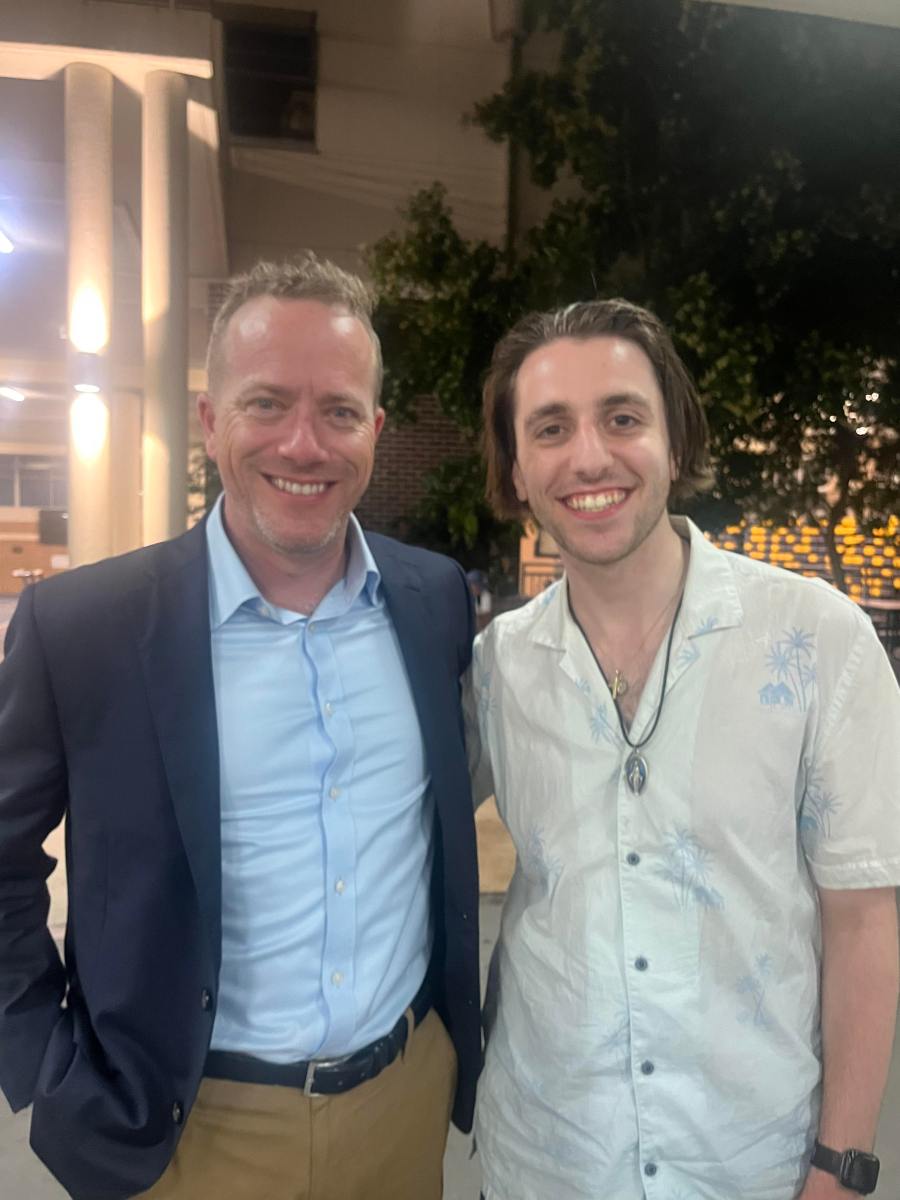
Last week I had the opportunity to attend the Sydney Catholic Youth Purpose Conference. I had the great pleasure of hearing Jason Evert, founder of the Chastity Project, and Matt Fradd, host of popular Catholic podcast Pints with Aquinas, speak on the topics of gender, sexuality, chastity, living the Catholic life, culture, and the Church. I also had the privilege of being in the audience for a live version of Pints with Aquinas.

There was so much to take in from the Conference, and while I’d love to discuss every single thing that Matt and Jason spoke about – because the content was so good – there were two points that really stuck with me. One of these came from Matt, the other from the Archbishop of Sydney, Archbishop Anthony Fisher.

I want to touch first on Matt’s point. In his second talk, Matt noted seven key things that each of us – especially the Christians among us – should do. While all seven were fantastic, one of them really stood out for me.

“Find a bubble.”

Oftentimes we are told not to live in a bubble. We are given the impression that doing so can be isolating, that it can insulate us against the world. While, to a degree, this may be true, the negatives do not outweigh the benefits.

To expand a little on Matt’s point, he noted the importance of finding a good Christian community, a community that you can be yourself with, that will support you and be there for you when you need it. Really, it’s a community that you feel at home with. This is your ‘bubble.’

Being in such a bubble isn’t isolating. It’s actually incredibly liberating. It gives you the freedom to be who you are, to be raw, open, and honest. You are among people who you know you can trust. You all support each other in times of celebration and times of sorrow. No matter what, you know you have someone to lean on, and they know they can lean on you when they need it.

Having been in the realm of social and political commentary, there have been countless times that I have heard people say that we should avoid echo chambers. They say that if you get caught up in an echo chamber you’ll never come into contact with other ideas and different people.

Again, it’s not necessarily a bad thing to be within an echo chamber. What if this echo chamber is reinforcing the positivity in your life? What if it’s full of good and decent people, of virtuous beliefs and ideas?

If you’re living in an echo chamber like this, a ‘bubble’ with people who want to build you up while you do the same for them, chances are you’re all going to grow in virtue, faith, and goodness.

This is not to say that you’re never going to be exposed to ideas outside of your own. Part of the mission of a Christian is to go out into the world and speak with others, to evangelize, to catechise, and to sacramentalise. It is inevitable that, in carrying out this mission, you will come across people who hold different views and values to you. They might even be the complete opposite. But it is so important as Christians that we are open to listening to them and then conversing with them. Jason Evert, speaking on the issue of gender-fluidity and transgenderism, noted the importance of not only being the mouth of Christ, but also the ears of Christ. It is just as important, even more so, for us to listen as to speak. Many people have wounds that are not visible on the outside. Sometimes all they need is for someone to listen to them.

The culture that has taken hold of the world today is not all that pleasant. There are so many destructive acts and ideologies that are wrapped up in bows and given names that do not accurately describe them. For example, abortion is called ‘women’s healthcare.’ Healthcare would imply it is benefiting the health of an individual in order to maintain human life. Yet abortion is the leading cause of death, with tens of millions of innocent human lives cruelly taken each year.

Another example is the rampant hookup culture that plagues this world. As Matt said, people now just call this ‘sleeping together.’ That makes it sound so harmless. But it’s more than that. It is the devaluing of each other as human beings. Hookup culture just demonstrates that people are not valuing others for who they are. Rather, all they care about is using the other person’s body. Human beings are more than our bodies. We all possess a soul. We all possess unique qualities that make us who we are. We were created for a greater purpose than just to be used and to use each other.

The issue with our culture is that it has become so much more focused on how we can satiate our own selfish and meaningless desires, things that will only give us temporary pleasure. In order to maintain such pleasure, we have to continue to repeat and pursue the acts that allow us to achieve them. But eventually these acts will become tiresome and dull. Eventually, pleasure will give way to pain, to a state of bleakness or depression which will wash over the individual and conquer them.

And this goes to Archbishop Fisher’s point. In his interview with Matt and Jason on the live episode of Pints with Aquinas, the Archbishop spoke to how entrenched we can become in things that really don’t matter. He observed how we can start off looking for one thing on the internet, and then several clicks later we find ourselves somewhere far away from what we were originally searching for.

He also noted how people say they need to watch or read the news. He said that, most of the time, people are not doing this because they need to be informed of what is happening, but because it is entertainment. He went on to note how so much of the media is more focused on entertainment value rather than impartial information.

This really struck me. And I think it is something we all need to take heed of. Many of the ‘news’ stories we see or read focus on things we really don’t need to know about. A lot of ‘news’ these days is just people sharing their opinions and berating others. I think we really need to consider what we’re consuming, and, for those of us who write, what we’re putting out into the world and the impact it will have.

Over this last year, I have grown so much more deeply in my faith. I’ll go into this a bit more in my Year in Review, but I think it would be pertinent to mention a few details for the sake of what I’m discussing here.

I have been so fortunate to grow closer with other Catholics, to find a community that is so generous and supportive. I have grown in my friendships with other young Catholics who I am so privileged to know and who I thank God for every day. There have been several things that have happened this year that have really put everything into perspective for me. I thought I was pretty certain about some things, but sometimes God throws you a curveball and you start to learn what really matters.

I think it’s been about three or four months since I’ve actually written anything. Reflecting on the past few months, apart from the business of life, I think part of that was because I was really trying to figure out who I wanted to be as a writer. Again, that’s something I’ll go into more in my Year in Review, but I can say that spending time with friends, being part of a good community, and helping out with events within that community has really shown me what matters most.

I think I was struck by what Matt said because the world I’ve been living in has taught me that living in a bubble is a bad thing. And sure, it can be if that bubble consists of you and negative thoughts alone. That kind of bubble is small and isolated.

But after attending Purpose Conference, being among other young people who love God, love their faith, and want to build each other up, spending time with good friends, making new ones, and meeting others who are each walking the same path towards the Kingdom of God in different ways, I think I’ve found my bubble, and I’m so happy to be living in it.

Because this is our purpose as human beings – to bring light into the world, to find community and use our unique talents to help build up the Kingdom in whatever way we can, to be a listening ear, to help those who are struggling, to cultivate meaningful friendships and relationships. All of these things contribute to our highest goal, our ultimate purpose – to serve God and attain the Kingdom of Heaven.

The Venerable Bruno Lanteri had a motto that he used throughout his life of service to the Church as a priest: ‘Nunc Coepi.’ This translates to ‘Now I Begin.’ In a letter he wrote to a religious sister, Lanteri elaborated on what the phrase means:

‘Say with courage: Nunc Coepi – Now I Begin and walk always in the service of God. Do not keep stopping to look back, because he who looks back cannot hasten forward. Do not content yourself with beginning this year. Begin every day.’

Let us say each day, ‘Nunc Coepi’ and do what we can to be good, kind, and loving servants of God.

May God Bless us all as we walk together on this journey.

Featured

Welcome!

Hey! Welcome to JJ’s Outlook, a blog where you’ll find all my content and political commentary online. While I write for this blog, I also write for several publications, including The Spectator Australia and The Good Sauce. I post links to my articles in those publications here as well. If you like what you read, feel free to give it a like, or leave a comment to let me know what you think. You can also subscribe via email to the blog if you’d like to get email notifications when new posts go live.

Enjoy your visit!

Education? Indoctrination.

Education is a fundamental necessity for the growth of human beings. It is what allows us to learn the basics, and then expand our knowledge beyond them so that we have the capacity to live our lives to the fullest. Education should be inherently unbiased. It should be a tenet of society which gives us the knowledge to be able to form our own worldviews. Tragically, this is no longer the case. Education, in particular university-based education, has become corrupted by Left Wing ideology, transforming it into something entirely different. Rather than encouraging freedom of thought, it now thrives off indoctrination.

The universities are by far the worst. I can attest to this personally. In my first year of study at Griffith University last year, one of my assessments was more harshly marked than the others. I wrote an article on the education system in NSW and interviewed a Liberal MP who sat on the NSW Parliamentary Education Committee. In my assessment feedback, I was told that this MP was not relevant, despite his being on the Education Committee. It was an absurd response. Yet it likely occurred for a several reasons. The first: I wrote an article which was critical of the education system. They probably didn’t like that. The second: I interviewed Gideon Rozner, Director of Policy at the Institute of Public Affairs (IPA), a Conservative think tank. Universities these days tend to have contempt for Conservatives. However, in retrospect, it was probably my challenging of the University that upset them the most. Allow me to explain.

Earlier in the semester, I had read one of the lectures in my course study guide, which just so happened to discuss climate change. I cannot say I was surprised by this, given it is a typical talking point of the Left. However, when I saw them making the claim that 99.9% of scientists agree that anthropogenic climate change is real, and implying that it was unethical and irresponsible journalism for coverage to be given to climate skepticism, I knew something had to be said. The claims were so outrageous, but even so, I knew that young students would probably be susceptible to becoming indoctrinated with the falsehoods they were perpetuating. So, I wrote a four-page letter refuting their points using academic sources and making the point that they should be providing a more balanced view on the matter. I sent it to the tutor, who passed it onto the course convenor, and, despite requesting to be updated on the matter, I never was. I can, however, almost guarantee the jab I took cost me a few marks, but I have to say, it was worth it.

This is just one example of the bias in the university system. There are plenty of others. Even in creative writing subjects I have done, there have been references to Marxism and climate activism. It is not at all surprising. Indeed, I have come to expect it. For me, it has no major impact on me other than the fact that I may lose a few marks here and there if I dare to challenge these ideologues. But for others, it can shape their entire worldview. Students who are inundated with Leftist ideology in such a way as is done at universities, where they are practically taught to hate the other side, fall victim to political indoctrination. It is beyond reprehensible. But this is how the Left recruit.

There is a simple reason for this: the Left indoctrinate because they know if they give people accurate information about both sides of the political spectrum and then give them the chance to make up their own minds, people will choose to go Conservative. Why? Because Conservative is the logical side. It is the side of reason, the side of sensibility. Conservatives base their ideas in fact and logic. The Left base theirs in fantasy and pure ideology (although there is nothing even remotely pure about it). The means of indoctrination that has come to dominate in the modern world is identity politics.

Identity politics is all about grouping people based on their physical and personal characteristics. Be it race, gender, religion, political views, sexuality, the list goes on. Each group has their own attributions, with some being seen as possessing more “privilege” and others being more oppressed. For example, straight white males, typically Christian Conservative ones, are seen as the most privileged and the worst oppressors, while people of colour and those in the LGBTQ+ community are viewed as less privileged and more oppressed. Or at least, this is what the Left would have you believe. Identity politics is a concept that seeks to divide. Many would likely be familiar with the old adage “Divide and Conquer”. The whole premise is that by dividing the people, you can more easily take power. Why? Because rather than fighting against you, they will be fighting against each other. It is no surprise the Left have employed this strategy. It is, after all, the only way they can even have a shot at attaining power. Conservatives are far more likeable, and far more reasonable, thus making them far more electable than Left Wing politicians.

When it comes to education, university courses nowadays contain identity politics in one form or another. The worst of the lot is gender studies. Gender studies is likely one of the most useless degrees in existence. Basic biology tells us there are only two genders: male and female. The same people who tell you to believe the science when it comes to climate change would have you believe that there are anywhere up to 71 genders. This is not scientifically true. It is a thing of pure fantasy. Anyone who takes gender studies is just doing themselves an injustice, because it will not be useful for them. It is far more useful to do a degree that is going to help you get to where you want in life. That is why I chose Communications, specifically in journalism and creative writing. This degree will help me to get a foot in the door in the world of journalism, but also leaves a whole range of other options open if I need them (eg. Public Relations, Publishing, etc.). It is of use to me. Gender studies is of use to no one. It should not receive any form of government funding. If it does, the government are practically funding the indoctrination of students. That being said, they already are.

If anything, the government should be withdrawing funding from the universities until they ensure there is free speech on campus, and that students are not being subject to the personal biases of university professors. They should take a leaf out of Trump’s book so that universities start to care about free speech. Universities love money, and they will do practically anything to ensure they have the most they can. It would be a brilliant move on the government’s behalf to force their hand when it comes to the matter of free speech.

It is a sad plight of the world that institutions of education in the modern day have chosen business over education. Universities in particular have, as Canadian Professor Jordan Peterson puts it, “lost their purchase on education.” Peterson is tragically correct. Universities around the world have journeyed down the path of socialism, selling their souls to the devil. In fact, even Peterson himself has said “don’t send your kids to University”. This is from a university professor who taught at Harvard, and who still teaches at the University of Toronto. It is shocking, and just goes to the extent of the tragedy that is the death of education in the university system.

The plight of education is, however, not limited to universities. Indeed, Leftist ideology has infected the education system in general. For example, teaching students that gender is a social construct. Recently, One Nation’s NSW leader Mark Latham introduced a Bill to the NSW Parliament to outlaw the teaching of gender diversity in schools. In introducing it, Mr. Latham said, “If they can convince young people that things such as family and gender are socially constructed and that there is some kind of conspiracy to deny them their true identity, then no part of our culture is safe. The Parliament should legislate to defend the family unit and the biological science of gender. Parents, not schools, are the teachers of the values of their children.” Mr. Latham is correct. Gender is not a social construct. This is the post-modernist agenda at work. They are attempting to brainwash children into believing their gender is fluid in a bid to destroy one of the pillars of Western Civilization, the family. These attempts to push their ideology onto kids is reprehensible. These sorts of ideas have no place in the education system.

A more potent example of Left-Wing ideology flooding the education system are the ‘climate strikes’. These ‘strikes’ encourage students to skip school and use time that could be better spent on their education to protest for “climate action”. Here is the logic they do not want to believe and that they just will not teach students these days: the climate has been changing since the Earth’s beginning. It is nothing new. Left-wing ideologues will have you believe otherwise, but they are only spruiking this narrative for personal and political gain. Schools are not doing students any favours indoctrinating them with the new age religion that is climate change. But they have perpetuated this for years and it is likely to continue.

I can recall several lessons in Year 8 English that consisted of my class being shown An Inconvenient Truth. For those who are not familiar, this was a documentary film in which former US Vice President Al Gore presented what would now be classified as climate alarmism. I remember watching this, seeing the diagrams and simulations being shown, hearing Gore say that it was only a matter of years until sea levels would have risen high enough to swallow up small island nations and large areas around the borders of the United States. I am almost ashamed to say that I fell for that. Looking back on it now seven years later, I can see how illogical that type of thinking was. None of it came to fruition. It was, as is typical of these Left-Wing ideologues, pure fantasy.

Despite feeling like an utter fool for believing this conjecture at the time, I share this anecdote now in the hope that it may make other students, other young people, who have been relentlessly subjected to a system of indoctrination to think again, and to question their beliefs. The story I have told you is a perfect exemplar for the high level of susceptibility of young people, how malleable their minds are. I fell for it, so can you. These people rely heavily on students not thinking for themselves. Independent thought is extremely dangerous to their cause.

In our education systems, students are taught to hate. They are taught to hate anyone who opposes the Left-Wing ideology with which they are indoctrinated. They are taught to hate Conservatives. They are taught to hate capitalism. They are taught to hate free speech. They are taught to hate our democratic nations. US President Donald Trump put it brilliantly when he said during his speech at Mount Rushmore that there have been “decades of Left-Wing indoctrination in schools that teaches students to hate our nation.” This is true not only of the United States, but countries around the world, including Australia. It is unacceptable and must be stamped out of the system if we ever want to return to genuine education.

Now this is not to say that all schools are like this. There are likely some that do not stand for the ideological virus that post-modernists wish to spread throughout the entire education system. Nevertheless, most of the system is infected, with the only cure being a complete overhaul. If we ever want to ensure students are not taken advantage of for political purposes, we must do one of two things: we can either teach them about the views of both sides of the political spectrum in an unbiased fashion, or we leave politics out of education completely. Young people should not be manipulated simply because they are easily led. I am sure that if you showed a young person a video that said their future was in jeopardy because of carbon emissions, they would probably believe you right then and there for two reasons: 1. They are extremely susceptible and would likely have no prior knowledge of this nor conduct research on it, and 2. It gives them the sense that their future is threatened, taking away their hope. Therein lies the cruelty.

It is one thing to indoctrinate someone, but to take away their hope so they will follow you blindly into the abyss is another. It is heartless, it is beyond cruel. Children should not be used as political pawns. They are not minds for you to hijack to further your own agenda. They are innocent human beings who should be afforded the opportunity to have a real education, not a completely political one. They should be taught to love our nations. When it comes to politics, they should be well-informed and be given every opportunity to form their own views.

Education was never supposed to become indoctrination. When I decided to get into journalism, it was for two reasons. The first: we need more good and honest journalists in the world, considering the media has, similarly to the education system, been overrun by Left-Wing ideologues. The second was this: I saw what had been occurring in education, and I wanted to help change it. I wanted to ensure that students would not be taken advantage of by ideologues, but rather be given the chance to think for themselves. I know the system is not going to change easily. But with Professors like Jordan Peterson, with politicians like Mark Latham, and with fellow Conservatives who want to see the skewed system be restored to one that gets back to the basics of education, I know it is possible. This is important not only for current generations, but for future generations too. We must prevent more students from being indoctrinated.

We must put education back into the education system.