
2023: A Reflection

Every year when I sit down to write a ‘Year in Review,’ I reflect on what the most important parts of my year were. I consider what parts of my life had the greatest impact on me, and how I may have impacted others. And I reflect on what lessons I have learned throughout the year. It can be an incredibly sobering experience that really puts what matters most into perspective.

So many people write a ‘Year in Review.’ Honestly, I wouldn’t blame you if you’re sick of reading them. So I’m not going to write a ‘Year in Review.’

Instead, I’m going to share with you my reflections on what 2023 has taught me. It’s not going to be entirely structured . It’s just going to be me reflecting on what I’ve learnt and what matters most to me now.

Change is, I suppose, inevitable. But it’s what we make of it that matters. Earlier this year, I experienced a significant change that, to be quite honest, devastated me. I probably wasn’t the only one who felt like I was experiencing a great loss. In fact, I know I wasn’t the only one. But I think what really made this change difficult to comprehend was that it was taking away something that had really helped me on my own journey the previous year and was continuing to do so.

But you know what? Looking at what happened after that change came about, I feel like there have been such incredible things that have made up for the sense of loss I was feeling earlier in the year.

That change put me in a position where I realised that I wanted to do more. I wanted to serve others as much as I could and help them to grow in their faith.

Ash Wednesday this year was the real turning point for me. It was on this evening, after attending the Sacrament of Reconciliation, that I realised just how beautiful the Rosary was. I began to develop a devotion to Our Lady, who I thank every day for bringing me closer to her Son. I discovered the beauty of Adoration of the Blessed Sacrament. It never ceases to astound me that we are able to come and spend time in the True Presence of Jesus Christ. It is also so wonderful to know that there are 24-hour Adoration Chapels where Jesus is waiting for us to come and visit Him all the time. I really wish I had understood and truly discovered Adoration earlier in my life, but I know God’s timing is perfect, and He brought me to His Son when I was in need of a greater relationship with Him.

In order to continue to deepen my relationship with Christ, I decided to start going to Mass at least a little more often than just once a week for Sunday Mass. It started with attending a First Friday Mass at Mary, Queen of the Family Parish, Blacktown. I noticed that the parishioners were praying the Rosary together during the time of Adoration, and so I began to pray my own Rosary. I was so happy to be there that I decided to come back the next Friday, and the Friday after that, and so I became a regular attendee of Friday Adoration and Mass at Blacktown.

After some time, I stopped praying my own Rosary by myself and joined in with the other faithful Catholics who were praying it together. I think it was after I read that it is so much more powerful to pray it together, given that when we do it is like an army going into battle against evil.

After a while, I was asked to lead the third decade of the Rosary whenever I was at St Patrick’s on a Friday night. I felt so privileged to be able to not just pray with others, but to lead them in prayer.

But I think the greatest thing to come out of becoming part of the community at MQOF Blacktown is the opportunity I have been given to help out with the youth that are part of the Parish. This has been one of the great highlights of my year, and I feel privileged to have had the chance to get to know such good people.

I think something I really lacked when I was going through a dark period in my life was good solid people to lean on (other than my amazing family, of course!). I feel like I have now found those people.

Last year, I was introduced to two people who I only knew by name as the leaders of the youth at Blacktown Parish. I only really got to know them a little more over the remaining six months of the year, meeting them here and there at events mainly.

It wasn’t until the change occurred this year and I began going to MQOF more often that I really got to know them.

I feel honoured to have been there to witness the beginning of their initiative to get the youth of the Parish to engage more with the Sacraments, running a Victus program every First Friday with Adoration, Reconciliation, Holy Mass, and Fellowship following Mass, often with a great talk to help young Catholics to continue to develop their faith and grow in their love of God.

I felt even more privileged when I was asked to lead the Rosary on these Victus nights. It is such a beautiful experience to lead people in prayer. Being at MQOF and praying the Rosary with others, I have ended up learning prayers that I never knew before, including the Memorare and the Prayer to St Michael the Archangel.

I was also asked to be the Reader at Victus nights for Mass. It is always a privilege to be able to proclaim the Word of God, and I am so grateful to have been able to do so on many occasions.

In doing all of this, I have gotten to know and grown closer with two people who I am truly grateful to God for. Cryste and Blake, I know you’ll read this. So consider this an appreciation post.

Blake worked hard to get the youth established at MQOF. As Youth Minister, he had the task of engaging the youth and providing them with opportunities for formation. One way in particular that he was able to do this was by getting Simon Carrington, a gem of a speaker on Theology of the Body, love, and chastity, to come out MQOF to give a series of talks. It was so heartwarming to see so many young people attending these talks. Simon is a really great guy with such an important message.

While Blake was working behind the scenes to make things happen, Cryste was using the gifts and talents that God has given her to engage and connect with the youth and keep them involved in Parish life. She used her skills to put together engaging content and get the Victus program off the ground.

When Blake departed MQOF Parish, the youth were left without a Youth Minister. Having worked closely with Blake and Cryste, I saw how valuable the work they were doing in the Parish was, how it was having a profoundly positive impact on the youth, how even youth from other Parishes were coming to MQOF for Victus.

Having just returned from the World Youth Day pilgrimage, Cryste and the youth were thrown in the deep end. But even in the face of such a challenge, she stepped up as Youth Coordinator and has volunteered countless hours to enrich the faith of MQOF youth. It has been a great privilege to work alongside Cryste as part of the core team for youth at MQOF and I am in awe of the way she has kept the youth going strong at the Parish and her dedication to serving the Lord. God has truly blessed the youth of MQOF with a brilliant leader.

It would be remiss of me not to make mention of the Annual Christmas Gala at MQOF as well. The youth of the Parish worked so hard and put in so much effort to write, produce, and put on an incredible and entertaining musical built around the birth of Our Lord Jesus Christ. As someone who has been helping out with the youth for a little while now, I am so proud of what they have accomplished. They are so talented. If you weren’t at the Christmas Gala this year, or even if you were there, you need to come next year. These young people are some of the best and MQOF is lucky to have them.

Blake, thank you for being such a good friend and helping me in my journey of serving the Lord this year.

Cryste, I am so grateful to you for allowing me to be a part of the youth team at MQOF. Thank you for trusting me to help out and serve God by serving the young people of the Parish. And thank you for being such a wonderful companion on my journey of faith this year.

God has truly blessed me, and I am so grateful to Him for these two dedicated servants of God.

To all the youth at MQOF, if you happen to be reading this, thank you for making me feel welcome and part of your community. You are all good people, and it has been so lovely getting to know you all.

It is my hope and prayer that MQOF youth will continue to thrive in 2024 and the years to come.

As I have continued to grow in my faith throughout the year, I made the decision to take up serving at Mass. After undertaking a highly informative and well-run Acolyte course in the Archdiocese of Sydney, I have had the opportunity to serve at several Masses. It is always a special privilege to serve the people of God in any way, especially in the Holy sacrifice of the Mass.

I am also thankful to God for helping me to finally complete my university degree. I have now achieved a Bachelor’s Degree in Communications, majoring in Creative Writing and Journalism. And while I am glad to have finished my studies, I must say that I’m not entirely sure that journalism is something I want to pursue anymore. I think that, as a writer, I want to be able to do good rather than just be a part of entertaining people with negativity. I want to be able to give back to the community in some way. I have also developed a great love for the liturgy, which is something I am considering pursuing more. I’m honestly not really sure where I’ll end up at this stage, but I know that God will guide me to where I need to be.

I was just saying to someone the other day that God has a way of placing us where we are needed to continue to build His Kingdom and help bring others to Him, to be His representatives here on earth.

I also had the incredible opportunity to attend the Sydney Catholic Youth Purpose Conference this year, where I had the privilege of hearing both Matt Fradd and Jason Evert speak and got to meet more good and faithful Catholics.

And I also finally got to see my favourite band, OneRepublic, live in concert this year. It was absolutely worth it.

I think for me this year has been one where I have experienced so much growth, especially in my faith and prayer life. It has been a year about building community, about understanding my faith, sharing it with others, and walking alongside them on the journey towards eternal life.

I think it goes without saying that I wouldn’t be where I am today without my family, and I am grateful to God for them. They are always there to support me and I am blessed to have them.

But I think what this year has really taught me is that everyone needs a good community that they can be a part of. For me, that community needed to be faith-based, and I am so happy that I have finally found that community. I am grateful to the community at St Bernadette’s, which will always be my home Parish. I am also grateful to have met some great people at St Paul the Apostle Parish, Winston Hills. But I think what I really needed this year, what I’ve really been looking for, is a good community of young people who love God and want to share the faith with others, and I am so glad to have found that in MQOF Youth.

I feel truly blessed that God has brought certain people into my life, answering the prayers I made back when life wasn’t so great. I understand now that God was listening. He was just making me wait, and I know now that the wait was so worth it.

I am so grateful for these people that God has blessed me with. It has been such a wonderful experience getting to know them more, watching them achieve incredible milestones, and, above all, to grow in holiness with them throughout the year. I hope God will continue to shower us all with blessings in 2024 and beyond.

Glory to God, man. Without Him, without my faith, I really don’t know where I’d be right now. I think that even in the darkest moments of my life, it’s my faith that has been the one thing that has kept me from going over the edge. Faith is such a beautiful thing to have. While we all inevitably fall at times, as is part of our human nature, God is always there to help us back up. He is so good. He loves us so much, even when we are struggling, even when we are at our lowest, even when we have fallen into sin, even when we don’t love Him. He wants us to seek Him out, He wants us to come back to Him when we have fallen, He wants us to love Him even when it’s hard to do so. He wants each one of us to be with Him in His Heavenly Kingdom one day.

God is so good. I’m so glad to actually have a proper relationship with Him now. And I’m so glad to be able to share that with others. I am so unashamedly Catholic, and I have so much love for Our Lord and for Our Blessed Mother and all the Saints. I have done so much reading on the Church and the Saints this year, including reading through the Catechism of the Catholic Church. And while the Church may go through its own struggles and stray from the teachings of Christ at times, I know that we have such a beautiful faith, that God has given us such an incredible gift, and that Jesus Christ has already won the battle against sin and evil.

Viva Cristo Rey!

Thanks be to God for another year.

May God Bless you all.
God’s Timing

Many times in life we can become impatient. We know that we only have a limited amount of time on this earth, and so we want things immediately. We struggle with waiting.

Certainly, the culture of instant gratification that has crept into the world does not help with this lack of patience that we have. We feel like we need everything right away, rather than being happy with what we have and having faith that what we desire will come in time.

I think something we really tend to wrestle with God on is timing. When we ask God for something, when we pray for something, we hope that He might respond immediately, or at least very soon after we make our petition. But oftentimes that doesn’t happen. Instead, we find ourselves being made to wait. Sometimes we will pray over and over again for something we would like, or a certain outcome we desire, and yet receive no indication that it will even come to pass.

This is because God does not work on our time. We work on His.

God’s timing is certainly something that can be difficult to understand. Sometimes we will find ourselves waiting for lengthy periods of time before we realise that He has answered our prayer. And this realisation may not come right away when the prayer is answered. It may take some time before we realise what God has done for us.

For example, there may be a time in your life where you find yourself really struggling. It might seem like the world is caving in on you. You lack motivation, your mental health has taken a significant hit, and you want nothing more than to find a shred of true happiness. You pray constantly for this, but the struggles you are facing persist.

While things may begin to get better over time, it is not until maybe two or three years later that you come to the realisation that God has actually answered your prayers from that period of darkness you faced. And that revelation can often come when you least expect it. For example, you might have just had a conversation with people you truly value, and, following this, when you are on your own again, it hits you – God brought these people into your life to answer that prayer you made three years ago when you were struggling to even accomplish anything meaningful.

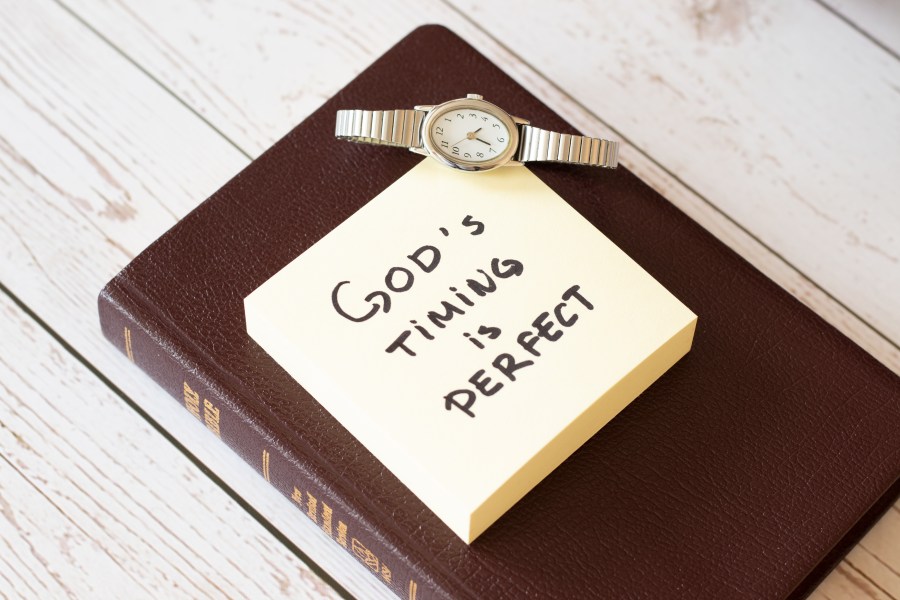
God’s timing is perfect.

As a Catholic, I know how difficult it can be when God doesn’t seem to be answering your prayers. It can really test your faith. There have been times throughout my life that I have questioned God, when I have simply asked ‘Why?’ There are moments when you wonder if God is really listening, if He can really hear what you are saying, what you are asking, what you are pleading for. There might even be times when you wonder if it is even worth praying when your prayers seem to go unanswered.

I think that when we experience something difficult to deal with, most often a loss of some sort, we struggle to understand why God would allow this to happen to us. This struggle can be compounded if we have prayed for a different outcome, which we likely have done.

It is difficult for us as mere human beings to truly understand the will of God and His timing. We may never be able to truly comprehend the reasoning behind a loss we have faced, at least not until we meet God face-to-face. And yet, even then, we will be so enamored by His beauty that understanding the reasons behind the losses we faced in our earthly lives will no longer matter.

But while we are on this earth, we will inevitably continue to search for answers to these central questions of life. And so it is probably worthwhile to at least attempt to answer the question of loss and ‘unanswered’ prayers.

I think God allows us to experience such losses because He wants us to grow to love Him more. And yes, I know that sounds strange. Why would God want us to struggle if He wants us to love Him more? Won’t our struggles make it harder to love God, given He is allowing us to endure them?

In our limited human understanding of God, such a reason is difficult to comprehend. But I truly believe that this is what God is attempting to do by permitting us to endure difficult periods in our lives. Through our struggles, He is purifying us. He is allowing us to grow, deepening our faith and love for Him.

Because true happiness does not come without suffering.

All of this, the waiting, the suffering, and the cathartic moment of joy that follows, originates in the days of old. It dates back to the time of Abraham, with whom God made a covenant, promising him that he would be the father of many nations, and that his descendants would be as many as the stars in the night sky and the grains of sand on the seashore. Abraham and Sarah waited many years to have a child, each being put through trials of faith by God before they finally had a son in Isaac.

However, the waiting for the fulfillment of the covenant God made with Abraham continued for a long time. The people of Israel waited for centuries for the promise to be fulfilled, and so it was when Jesus Christ came down from heaven and humbly assumed our own human form. But in order for the fulfillment of the Scriptures to come to pass, Christ had to suffer immensely, being imprisoned, scourged, crowned with thorns, and made to carry a heavy cross a great distance (estimated to be approximately 600 metres, including up steps and mountainous terrain) before being nailed to the cross and left to die.

At the time, Christ was not the only one who was suffering. His Mother, Mary, and His disciples were all struggling with the loss of their Son and friend. Even though the Blessed Mother knew that her Son was going to endure great suffering and death, it did not lessen the grief she felt upon seeing what was happening to Him.

Yet that suffering turned into great joy when Christ rose from the dead having conquered sin and death and winning for us the opportunity to spend eternal life in the Kingdom of Heaven with Him.

Again, God’s timing was perfect.

The suffering we endure in our own lives is nothing compared to the suffering that Christ endured for us. But that does not mean that it is any less difficult to deal with. When we are going through such difficult times, we should do our best to continue to pray, to continue to talk to God, and to unite our suffering with Christ’s suffering on the Cross.

Eventually, in God’s time, we will experience that cathartic moment where we realise that He has been listening, and He has answered our prayers, just maybe not in the way we expected.

God is so good. His timing is perfect. And He truly loves us, even when we may not be able to see it.

Death And New Life

Death. It’s not a subject we particularly enjoy discussing. I imagine that for most of us, upon hearing the word ‘death,’ thoughts would flow about what might happen to us when we die. We might think of a loved one who has already passed on and wonder what happened to them. We might associate death with pain, grief, and sadness. Death, to many, is the end. It’s like when the curtains are pulled back in and darkness floods in from every side. The light is extinguished. There is no encore.

There have been many different ideas stemming from various cultures and religious beliefs regarding what happens when we die. Some believe that when we die we are reincarnated, be it as a plant, animal, or even another human being. Some believe that the so-called ‘light at the end of the tunnel’ is the light emitting from the hospital room where we are being born as a different human being, and that the reason we cry when we are born is because we have just died in our old life. Others believe that we are just trying to get out of a never-ending cycle of life and death.

But, while some may think that when we die the screen fades to black and that’s that, this is not what death is.

Death is so much more than just an ending. It’s a new beginning. It is something we all inevitably must face, but it does not have to be something we face with fear.

I think it is almost a natural human instinct to fear death, especially in the age we are currently living in. We live in a world where everyone wants to be their own god, where God is viewed as nothing more than a mythological figure, a fairy tale that people believe to make themselves feel better. It actually makes a lot of sense that fear has taken such a hold in a Godless society, a fallen world that is obsessed with sinful things and pleasures that will not reach beyond the earthly plane.

Now that does not mean that it is a bad thing to be fearful of death. It is perfectly normal to worry about what is going to happen after you die. In fact, I think much of the time we start to focus on how our families will fare. Will they be ok without us? Will we have done everything we can for them? We wonder how others will be impacted by our death.

While this is all understandable, our focus should be on something else: life.

What a paradox, right?

It is pretty astounding how much we can get caught up worrying about death that we actually forget to live.

If we are contemplating death, we should consider the life we want to have lived before we inevitably depart this world. Have we lived a life of service to others? Have we done our utmost best to shine a light in a world that is clouded by darkness. Are we holding onto any grudges, or anything for that matter, that we need to let go of before leaving our earthly lives behind? Have we, truly, lived a good life?

And, particularly for Christians, have we lived a life worthy of the Kingdom of Heaven?

They’re hard-pressing questions. That is the way they are supposed to be. They are supposed to really force you to reflect deeply and consider whether there are any changes you need to make to your life, no matter how small, so that you can say at the end of this earthly pilgrimage that you lived the best life you possibly could.

In order to live a good life, we need to die unto ourselves.

I think that, in a world where we have become so attached to things, we have also become attached to parts of ourselves that are weighing us down, parts of ourselves that are eating away at us and causing us, or those near to us, great hurt or discomfort. When we do this, those parts of us hang over us like dark storm clouds. They blot out the light of our hearts, minds, and souls, darkening them and turning us away from what enlightens them. Not only do such attachments make it difficult for us to live a good life, they make it difficult for us to live at all.

To be able to live the good life in the hope of attaining eternal life face-to-face with our Creator in the Kingdom, we must detach ourselves from these parts of our being and allow them to die. This is never going to be all that easy to accomplish. It can take hard work and persistence to finally achieve the desired result. These parts of us can become so ingrained in our being that allowing them to die is akin to chopping off a hand.

For many, death to self is not likely to be an overnight phenomenon. It is more probable that it will be a process that may take a little longer to complete. In fact, it might just take a few attempts to finally detach yourself and allow the part of your being that is holding you back to die off. But it will undoubtedly be worth it.

Why?

Because with death comes new life.

It is a theme we see recurring throughout the books of the Bible. John, in his Gospel, writes of an occasion on which Jesus’ presence is requested by some Greeks. When Andrew and Philip tell this to Jesus, he speaks of the grain of wheat:

‘Truly, truly, I say to you, unless a grain of wheat falls into the earth and dies, it remains alone; but if it dies, it bears much fruit.’ (John 12:24)

St Paul in his letter to the Ephesians writes:

‘You were taught, with regard to your former way of life, to put off your old self, which is being corrupted by its deceitful desires; to be made new in the attitude of your minds; and to put on the new self, created to be like God in true righteousness and holiness.’ (Eph 4:22-24)

Of course, the greatest example of the new life that comes with death is the great sacrifice of Christ. Jesus appeared to have died, but on the third day he rose to new life, granting us the opportunity to do the same.

When we die to ourselves and cut off those parts of our being that are not allowing us to live a truly good life, other good parts of our inmost selves can begin to flourish. It is like we are removing the weeds from the gardens of our souls so that the flowers that were being choked can now grow and bloom, creating a beautiful array of virtue.

Death actually plays such an important role in our lives. Not only does it help us to understand life, it helps us to attain it. When a loved one dies, we mourn their loss. But in mourning we also often remember the life they lived, particularly the good memories we shared with them, the good that they did in their lives to enhance our own. When we allow a part of ourselves to die, we may also mourn it, especially if we were greatly attached to it. But we are consoled by the new life that flows within us.

You may remember that I recently mentioned the Venerable Bruno Lanteri, a priest who had a motto for living his life well: Nunc Coepi – ‘Today, I Begin.’ Each and every day we must die to ourselves and begin again anew.

For death is not the end. It is merely the end of the beginning.

Finding The Bubble

Last week I had the opportunity to attend the Sydney Catholic Youth Purpose Conference. I had the great pleasure of hearing Jason Evert, founder of the Chastity Project, and Matt Fradd, host of popular Catholic podcast Pints with Aquinas, speak on the topics of gender, sexuality, chastity, living the Catholic life, culture, and the Church. I also had the privilege of being in the audience for a live version of Pints with Aquinas.

There was so much to take in from the Conference, and while I’d love to discuss every single thing that Matt and Jason spoke about – because the content was so good – there were two points that really stuck with me. One of these came from Matt, the other from the Archbishop of Sydney, Archbishop Anthony Fisher.

I want to touch first on Matt’s point. In his second talk, Matt noted seven key things that each of us – especially the Christians among us – should do. While all seven were fantastic, one of them really stood out for me.

“Find a bubble.”

Oftentimes we are told not to live in a bubble. We are given the impression that doing so can be isolating, that it can insulate us against the world. While, to a degree, this may be true, the negatives do not outweigh the benefits.

To expand a little on Matt’s point, he noted the importance of finding a good Christian community, a community that you can be yourself with, that will support you and be there for you when you need it. Really, it’s a community that you feel at home with. This is your ‘bubble.’

Being in such a bubble isn’t isolating. It’s actually incredibly liberating. It gives you the freedom to be who you are, to be raw, open, and honest. You are among people who you know you can trust. You all support each other in times of celebration and times of sorrow. No matter what, you know you have someone to lean on, and they know they can lean on you when they need it.

Having been in the realm of social and political commentary, there have been countless times that I have heard people say that we should avoid echo chambers. They say that if you get caught up in an echo chamber you’ll never come into contact with other ideas and different people.

Again, it’s not necessarily a bad thing to be within an echo chamber. What if this echo chamber is reinforcing the positivity in your life? What if it’s full of good and decent people, of virtuous beliefs and ideas?

If you’re living in an echo chamber like this, a ‘bubble’ with people who want to build you up while you do the same for them, chances are you’re all going to grow in virtue, faith, and goodness.

This is not to say that you’re never going to be exposed to ideas outside of your own. Part of the mission of a Christian is to go out into the world and speak with others, to evangelize, to catechise, and to sacramentalise. It is inevitable that, in carrying out this mission, you will come across people who hold different views and values to you. They might even be the complete opposite. But it is so important as Christians that we are open to listening to them and then conversing with them. Jason Evert, speaking on the issue of gender-fluidity and transgenderism, noted the importance of not only being the mouth of Christ, but also the ears of Christ. It is just as important, even more so, for us to listen as to speak. Many people have wounds that are not visible on the outside. Sometimes all they need is for someone to listen to them.

The culture that has taken hold of the world today is not all that pleasant. There are so many destructive acts and ideologies that are wrapped up in bows and given names that do not accurately describe them. For example, abortion is called ‘women’s healthcare.’ Healthcare would imply it is benefiting the health of an individual in order to maintain human life. Yet abortion is the leading cause of death, with tens of millions of innocent human lives cruelly taken each year.

Another example is the rampant hookup culture that plagues this world. As Matt said, people now just call this ‘sleeping together.’ That makes it sound so harmless. But it’s more than that. It is the devaluing of each other as human beings. Hookup culture just demonstrates that people are not valuing others for who they are. Rather, all they care about is using the other person’s body. Human beings are more than our bodies. We all possess a soul. We all possess unique qualities that make us who we are. We were created for a greater purpose than just to be used and to use each other.

The issue with our culture is that it has become so much more focused on how we can satiate our own selfish and meaningless desires, things that will only give us temporary pleasure. In order to maintain such pleasure, we have to continue to repeat and pursue the acts that allow us to achieve them. But eventually these acts will become tiresome and dull. Eventually, pleasure will give way to pain, to a state of bleakness or depression which will wash over the individual and conquer them.

And this goes to Archbishop Fisher’s point. In his interview with Matt and Jason on the live episode of Pints with Aquinas, the Archbishop spoke to how entrenched we can become in things that really don’t matter. He observed how we can start off looking for one thing on the internet, and then several clicks later we find ourselves somewhere far away from what we were originally searching for.

He also noted how people say they need to watch or read the news. He said that, most of the time, people are not doing this because they need to be informed of what is happening, but because it is entertainment. He went on to note how so much of the media is more focused on entertainment value rather than impartial information.

This really struck me. And I think it is something we all need to take heed of. Many of the ‘news’ stories we see or read focus on things we really don’t need to know about. A lot of ‘news’ these days is just people sharing their opinions and berating others. I think we really need to consider what we’re consuming, and, for those of us who write, what we’re putting out into the world and the impact it will have.

Over this last year, I have grown so much more deeply in my faith. I’ll go into this a bit more in my Year in Review, but I think it would be pertinent to mention a few details for the sake of what I’m discussing here.

I have been so fortunate to grow closer with other Catholics, to find a community that is so generous and supportive. I have grown in my friendships with other young Catholics who I am so privileged to know and who I thank God for every day. There have been several things that have happened this year that have really put everything into perspective for me. I thought I was pretty certain about some things, but sometimes God throws you a curveball and you start to learn what really matters.

I think it’s been about three or four months since I’ve actually written anything. Reflecting on the past few months, apart from the business of life, I think part of that was because I was really trying to figure out who I wanted to be as a writer. Again, that’s something I’ll go into more in my Year in Review, but I can say that spending time with friends, being part of a good community, and helping out with events within that community has really shown me what matters most.

I think I was struck by what Matt said because the world I’ve been living in has taught me that living in a bubble is a bad thing. And sure, it can be if that bubble consists of you and negative thoughts alone. That kind of bubble is small and isolated.

But after attending Purpose Conference, being among other young people who love God, love their faith, and want to build each other up, spending time with good friends, making new ones, and meeting others who are each walking the same path towards the Kingdom of God in different ways, I think I’ve found my bubble, and I’m so happy to be living in it.

Because this is our purpose as human beings – to bring light into the world, to find community and use our unique talents to help build up the Kingdom in whatever way we can, to be a listening ear, to help those who are struggling, to cultivate meaningful friendships and relationships. All of these things contribute to our highest goal, our ultimate purpose – to serve God and attain the Kingdom of Heaven.

The Venerable Bruno Lanteri had a motto that he used throughout his life of service to the Church as a priest: ‘Nunc Coepi.’ This translates to ‘Now I Begin.’ In a letter he wrote to a religious sister, Lanteri elaborated on what the phrase means:

‘Say with courage: Nunc Coepi – Now I Begin and walk always in the service of God. Do not keep stopping to look back, because he who looks back cannot hasten forward. Do not content yourself with beginning this year. Begin every day.’

Let us say each day, ‘Nunc Coepi’ and do what we can to be good, kind, and loving servants of God.

May God Bless us all as we walk together on this journey.

Who Are You Really Listening To?

It’s been a while, but I’m getting back to business with my latest for The Spectator Australia.

A recent article in the Catholic Outlook, the official publication of the Diocese of Parramatta, encouraged Catholics to listen to Indigenous Australians and support the Voice to Parliament.

But how can the Diocese preach on listening to others when it seemingly cannot listen to the everyday Catholics it has been entrusted with to shepherd?

Meanwhile, the Diocese is undertaking a Synod, viewing ‘synodality’ as the answer to the ‘signs of the times’. Yet, as we’ve seen over and over and have heard from Cardinal George Pell, Bishop Athanasius Schneider, and Cardinal Gerhard Muller, ‘synodality’ only allows Modernism to infect the Church.

If there’s one article you share with any Catholics, particularly those in the Diocese of Parramatta, let it be this one.